Is PLC Programming a Good Career in 2026? (Demand, Pay & Path)
Is PLC Programming a Good Career in 2026?
Yes — PLC programming is a good career. It pairs steady, broad demand across manufacturing, water, energy and logistics with above-average pay, a low barrier to entry for people who already understand electrical work, and a clear ladder from technician to senior controls engineer or systems integrator. It is hands-on, problem-solving work that is hard to offshore because the machines are physical and on-site — and reshoring plus automation is pushing demand the other way.
If you are weighing it up, this guide answers the three questions everyone asks — is PLC programming in demand, is the pay worth it, and is it right for me — then shows the realistic career path and how to start for free this week.
Are PLC programmers in demand?
Short answer: yes, and broadly. Programmable logic controllers run the machines behind almost everything physical — car plants, food and beverage lines, bottling, packaging, water treatment, power, warehouses and building services. Every one of those needs people who can program, commission and fix the control system, and there are far fewer of those people than the industry needs.
A few structural forces keep demand high:
- Reshoring and new capacity. New factories and upgrades to old ones all need controls work.
- An ageing workforce. A large share of experienced controls engineers are near retirement, opening senior seats.
- Automation everywhere. More robots, conveyors and instrumentation means more PLC and SCADA integration, not less.
- It is on-site work. You cannot offshore commissioning a line that is bolted to a factory floor.
The chart below is illustrative — it shows the kinds of industries hiring controls people, not exact vacancy counts. The point is that demand is spread across many sectors, which makes the skill resilient.
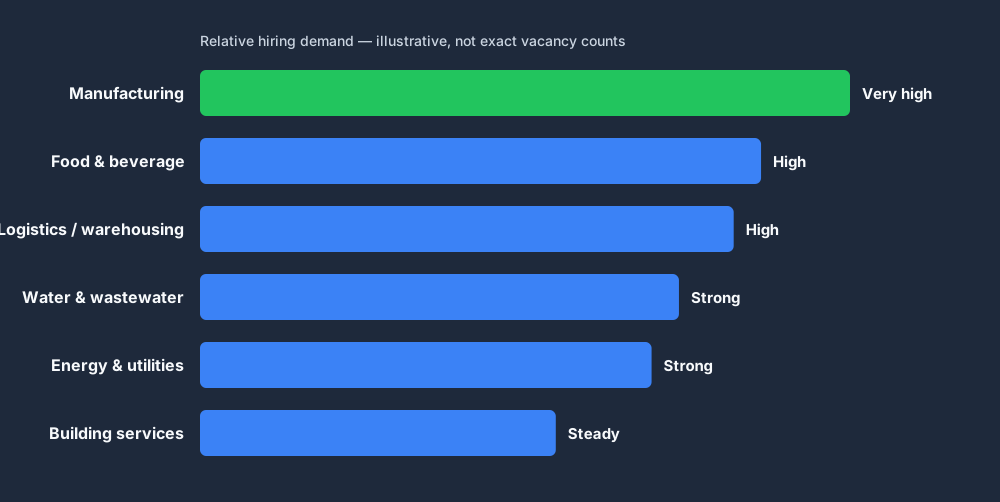
Figures above are indicative and for illustration only. Use them to gauge the spread of demand, not precise hiring numbers.
Does PLC programming pay well?
It pays well relative to most trades-adjacent roles, and it scales with experience and travel. A junior or technician role starts modestly; mid-level controls programmers earn a comfortable salary; senior controls engineers and freelance systems integrators sit at the top, especially those willing to travel for commissioning.
We keep the detailed, regularly-updated ranges in a dedicated post so we are not quoting stale numbers here — see the PLC programmer salary guide for figures by region and seniority. As a rule of thumb: pay rises sharply once you can commission a line solo and debug under pressure.
The honest pros and cons
No career is all upside. Here is the balanced view so you go in with eyes open.
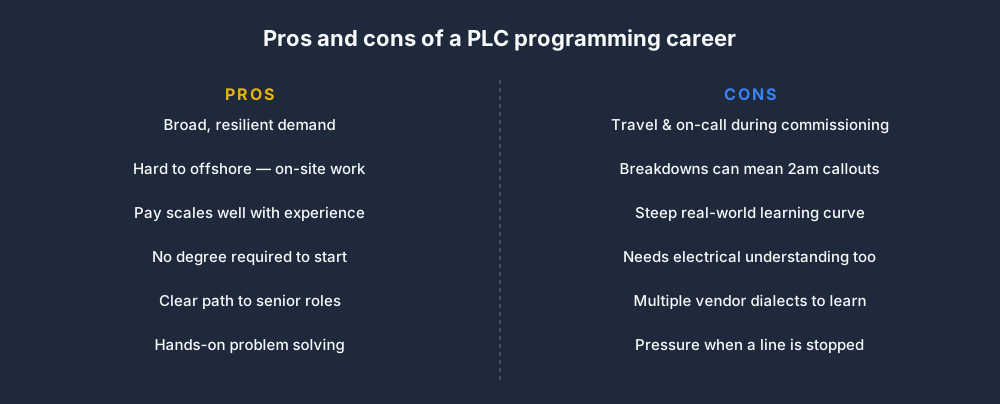
The two things people underestimate: the travel and on-call during commissioning and breakdowns, and how much of the job is electrical and mechanical understanding rather than pure coding. If you like being in the plant, solving a stopped line at 2am, those are features, not bugs. If you want a quiet desk job, look elsewhere.
Is PLC programming right for you?
It suits a specific kind of person. Run yourself through this checklist — the more boxes you tick, the better the fit.

You do not need a computer-science degree. The strongest PLC programmers often come from electrical, instrumentation or maintenance backgrounds and learn the logic on top. Curiosity and calm under pressure matter more than a CS pedigree.
The PLC programming career path
One of the best things about this field is that the ladder is clear. You can see exactly what the next rung looks like and what skill unlocks it.
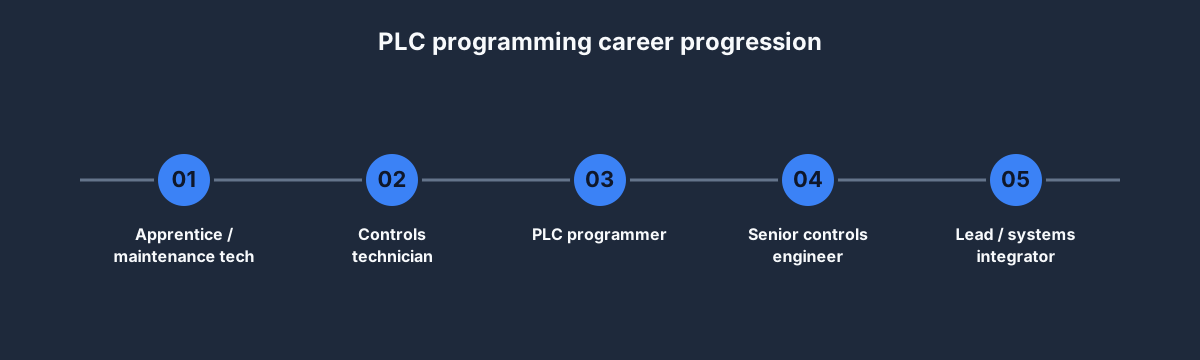
A typical progression:
- Apprentice / maintenance tech — learn the plant, the wiring, basic faultfinding.
- Controls technician — read ladder logic, make changes, swap I/O, run diagnostics.
- PLC programmer — write and commission programs, build HMIs, work to a spec.
- Senior controls engineer — own whole machines, mentor, handle the hard faults.
- Lead / systems integrator — design systems, run projects, or go freelance.
Many people branch sideways into SCADA, robotics or functional safety along the way — the PLC foundation transfers to all of them.
How to get started (no degree needed)
You do not need to wait for a course or a job to begin. The fastest route is to learn ladder logic and the scan cycle, then prove it by building small programs.
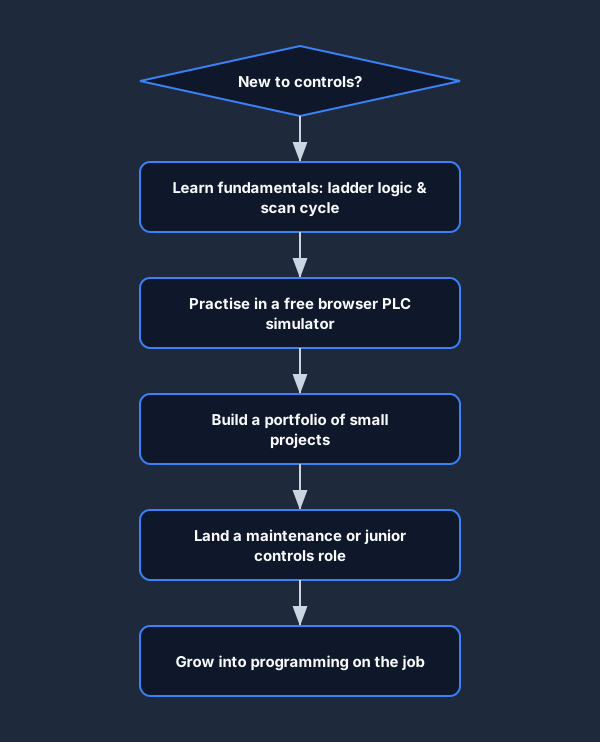
A practical sequence: learn the fundamentals → practise ladder logic in a simulator → build a portfolio of small projects (traffic light, motor seal-in, conveyor) → get a maintenance or junior controls role → grow into programming on the job. We cover the full route in how to become a PLC programmer.
The cheapest, fastest way to practise is in the browser — no hardware, no licences. Wire up rungs, run them and watch the logic execute in the free browser PLC simulator right now.
How does it compare to robotics, SCADA and electrical careers?
PLC programming sits at the centre of the automation world, which is why it is such a good base. Here is how it stacks up against the careers it most overlaps with.
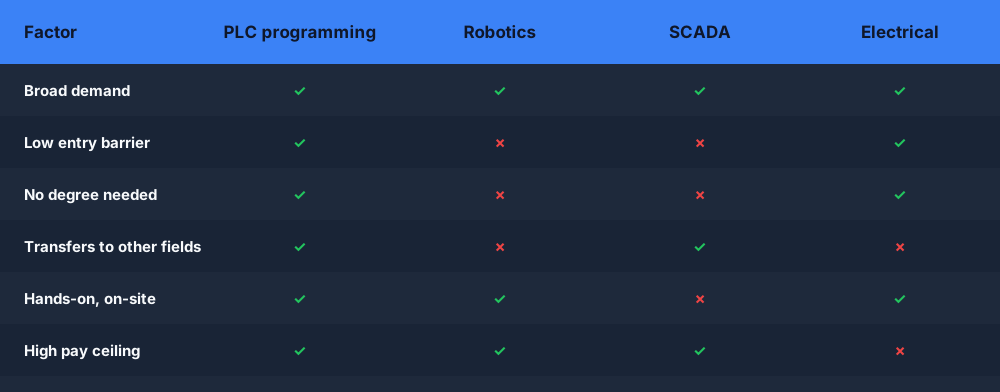
The key insight: PLC skills are the common denominator. A robotics or SCADA specialist who can also program PLCs is far more employable than one who cannot — and most controls people end up touching all three.
Verdict
PLC programming is a good career for anyone who enjoys hands-on problem solving, wants resilient demand that is hard to automate or offshore, and is happy to keep learning across electrical, mechanical and software domains. The entry barrier is low if you start from a trades background, the pay scales well, and the path upward is clear.
The only way to know if you will enjoy it is to try the work. Build your first rung in the browser PLC simulator today — it is free, runs in your browser, and is the same logic you will write on a real machine.
FAQ
Is PLC programming a good career in 2026? Yes. Demand is broad and resilient across manufacturing, water, energy and logistics, pay scales well with experience, and the work is hard to offshore because it is hands-on and on-site. The path from technician to senior controls engineer is clear.
Is PLC programming in demand? Yes — strongly. Reshoring, new factory capacity, an ageing controls workforce and ever-more automation all push demand up. Skilled controls people are consistently in short supply across many industries.
Do PLC programmers make good money? They earn well relative to most trades-adjacent roles, and pay rises sharply with the ability to commission and debug independently. See the PLC programmer salary guide for current ranges by region and seniority.
Do I need a degree to become a PLC programmer? No. Many strong PLC programmers come from electrical, instrumentation or maintenance backgrounds and learn ladder logic on top. Practical skill and calm faultfinding matter more than a computer-science degree.
Is PLC programming hard to learn? The fundamentals — contacts, coils, the scan cycle, timers and counters — are approachable, especially if you understand electrical circuits. The hard part is real-world commissioning and faultfinding, which you build over time. Start by practising in a browser PLC simulator.
Will PLC programming be replaced by AI or automation? Unlikely any time soon. Automation increases the number of control systems that need programming, commissioning and maintenance on-site — which grows the demand for PLC programmers rather than shrinking it.