PLC Programming Examples: A Curated Hub of Worked Ladder Logic
PLC Programming Examples
The fastest way to learn PLC programming is to read worked examples, then rebuild them yourself. This hub collects our best ladder logic examples — sorted by category and difficulty — so you can find one that matches what you are trying to build and open it in a free browser PLC simulator without installing anything.
Every example below links to a full walkthrough with the ladder logic, the I/O list and the reasoning behind each rung. Start with the start/stop seal-in if you are new, then work down the list as the concepts stack on each other.
How the examples are organised
We group examples into four families. Almost every real machine program is a mix of these, so learning one example from each gives you a toolkit that transfers everywhere.
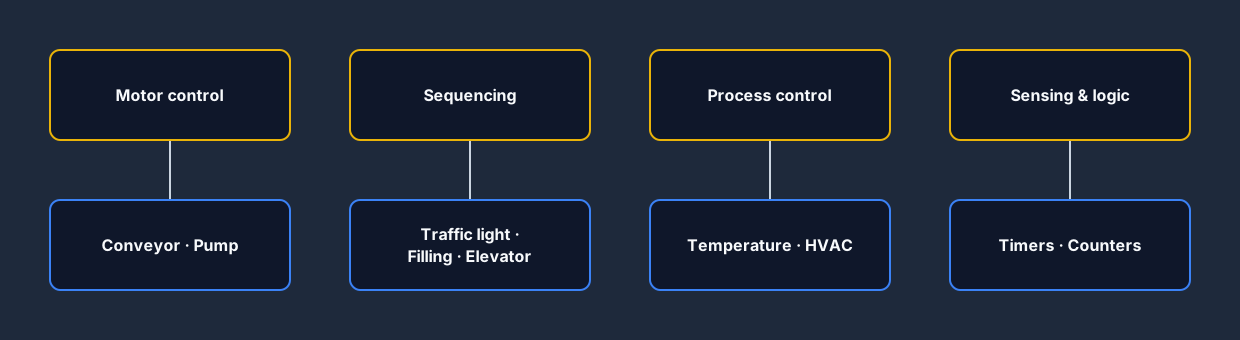
- Motor control — starting, stopping and protecting motors and actuators.
- Sequencing — making things happen in a fixed order, often on timers.
- Process control — holding a temperature, level or flow at a setpoint.
- Sensing & logic — turning raw sensor inputs into clean, debounced signals.
The "hello world" of ladder logic: start/stop seal-in
Before any of the larger examples, get the start/stop seal-in rung straight. A momentary Start button latches a motor on, the motor seals itself in around the start contact, and a normally-closed Stop button drops it. It is the single most reused pattern in industrial control.
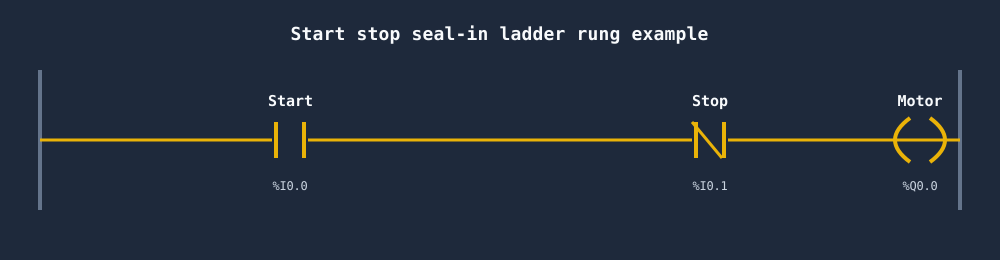
Read the full walkthrough in seal-in rungs explained — it covers why the Stop contact is wired normally-closed and how the seal-in branch holds the coil. Once that clicks, the rest of the examples are variations on the same idea.
Examples at a glance
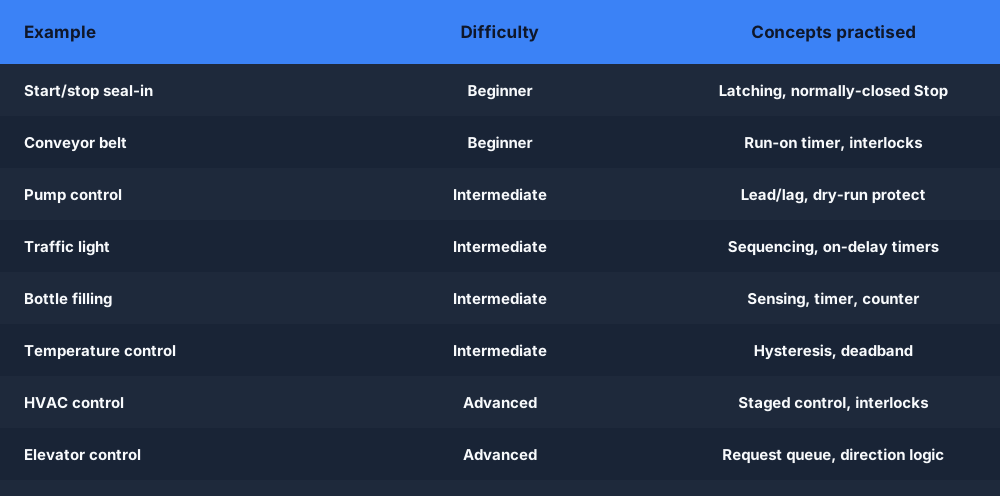
Here is every worked example in this hub with its difficulty and the core concepts it practises. Pick something one notch above what you already know.
Motor control examples
These build directly on the seal-in pattern and add timing, interlocks and direction control.
Conveyor belt control
A conveyor is the classic next step after start/stop: you add a run-on timer so the last part clears the belt, photo-eye interlocks, and often a jam-detect rung. See conveyor belt PLC programming for the full ladder logic.
Pump control
Pump logic introduces lead/lag duty sharing, dry-run protection and level-based start/stop using float switches. The worked example in PLC pump control shows how to alternate two pumps so they wear evenly.
Sequencing examples
Sequencing is where timers and counters earn their keep — steps fire in order, each waiting on the one before it.
Traffic light controller
The traffic light is the textbook sequencing exercise: a fixed loop of states driven by on-delay timers, with a clear safety constraint (never two greens at once). Walk through it in traffic light PLC programming.
Bottle filling line
A filling line chains sensing, a fill valve, a dwell timer and a part counter into one repeating cycle. The bottle filling PLC example is a great bridge between simple sequencing and a real production cycle.
Elevator control
An elevator adds request queuing and direction logic on top of sequencing — the most involved example in the hub. The elevator PLC programming walkthrough breaks the call logic into manageable rungs.
Process control examples
Process examples hold a measured value at a setpoint rather than just switching things on and off.
Temperature control
Bang-bang and hysteresis control of a heater is the gentlest introduction to process logic — turn the heater on below the lower limit, off above the upper limit. See PLC temperature control for the ladder and the deadband maths.
HVAC control
HVAC combines temperature control with sequencing (staged heating/cooling) and interlocks (don't run the compressor and the heater together). The HVAC PLC programming example ties several patterns together.
Sensing & logic building blocks
These are not full machines, but you will drop them into almost every program above.
Timers — TON, TOF and TP
Nearly every example on this page uses a timer somewhere. If on-delay, off-delay and pulse timers are still fuzzy, start with PLC timers explained and its timing diagrams.
Counters — CTU and CTD
Count parts, batches or cycles with up and down counters. The PLC counters CTU and CTD example shows the count, reset and done-bit behaviour you'll reuse in the bottle-filling line.
How to practise an example so it sticks
Reading an example is not the same as understanding it. Work through each one like this:
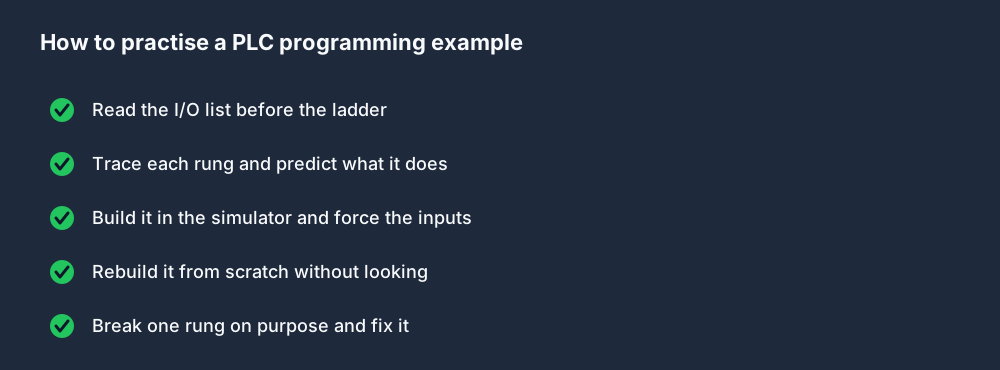
The non-negotiable step is rebuild it from scratch without looking. If you can recreate the rungs from a blank editor and explain why each one exists, you own the pattern.
Which example should you start with?
If you are not sure where to jump in, follow your current level rather than the topic that sounds most interesting.
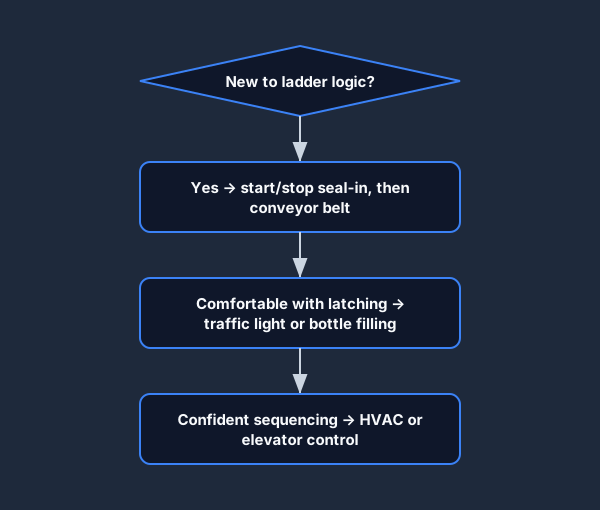
Beginners should always start at the seal-in rung even if it feels too simple — every later example assumes it.
Run any of these in your browser
You don't need vendor software or hardware to follow along. Every example here can be built and tested in the free browser PLC simulator: wire the inputs, write the ladder logic, force a contact and watch the coil energise in real time. When you want a guided version with checks and a pass condition, open the matching task in the scenarios library and build it against test cases.
Bookmark this page — we add new worked examples regularly, and each one links back here so the whole set stays one click away.
FAQ
What is the best first PLC programming example? The start/stop seal-in rung. It is the most reused pattern in industrial control and every other example on this page builds on it.
Are these ladder logic examples free to try? Yes. Every example links to a walkthrough you can rebuild for free in the browser PLC simulator — no install, no hardware.
What is the difference between an example and a scenario? An example is a written walkthrough with the ladder logic explained rung by rung. A scenario is the same task set up in the simulator with test cases and a pass condition so you can verify your own solution.
In what order should I work through these examples? Start with the seal-in rung, then conveyor and pump (motor control), then traffic light and bottle filling (sequencing), then temperature and HVAC (process), pulling in the timer and counter building blocks as you need them.