Practise Motor Control PLC Ladder Logic in the Browser
Build and test the classic motor-control rungs — start/stop seal-in, forward/reverse interlock, jog, and star-delta — with no install. An honest learning simulator for the ladder logic, not a real motor or drive.
Join 1400+ learners practicing PLC programming
Create a free account to save your progress.
Why this page
Motor control is the first real PLC job you will do.
Almost every machine starts with a motor, and almost every motor is controlled by the same handful of ladder rungs. Learn the start/stop seal-in, forward/reverse interlock, jog, and star-delta patterns once and you can read most industrial control schematics. This page walks each rung and lets you rehearse the logic in the browser before you wire anything real.
The classic first rung
Start / stop seal-in
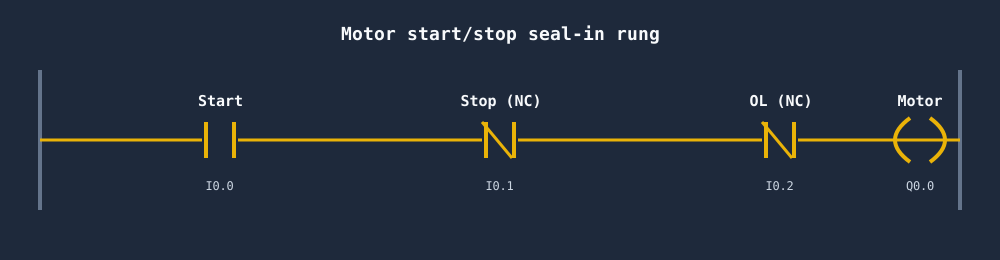
The three-wire start/stop rung is the foundation of motor control. A momentary Start push-button energises the motor contactor coil; a normally-open auxiliary contact of that coil is wired in parallel with Start so the rung seals in and stays on after you let go. A normally-closed Stop push-button in series drops it out.
Two details make it safe: the Stop button and the overload (OL) contact are both wired normally-closed. If a wire breaks, the rung opens and the motor stops — that is fail-safe behaviour, and it is the single most important habit in motor control.
Want the deeper theory on the seal-in? Read seal-in rungs explained, then come back and build one here.
The interlock
Forward / reverse interlock
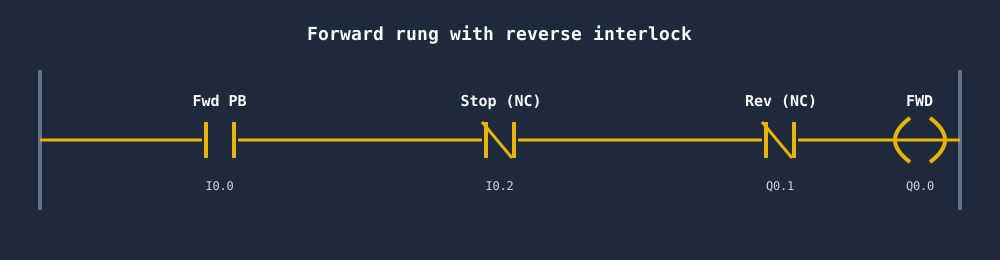
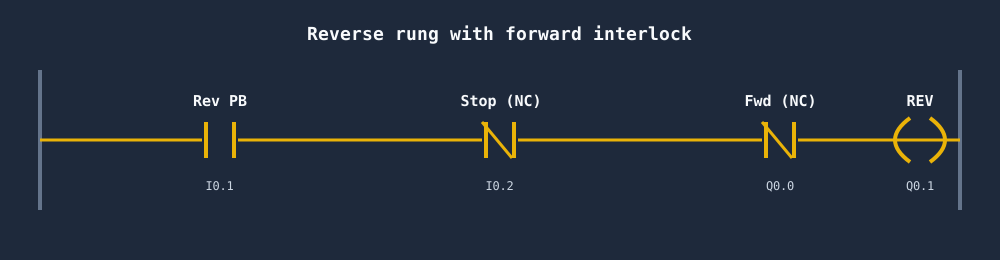
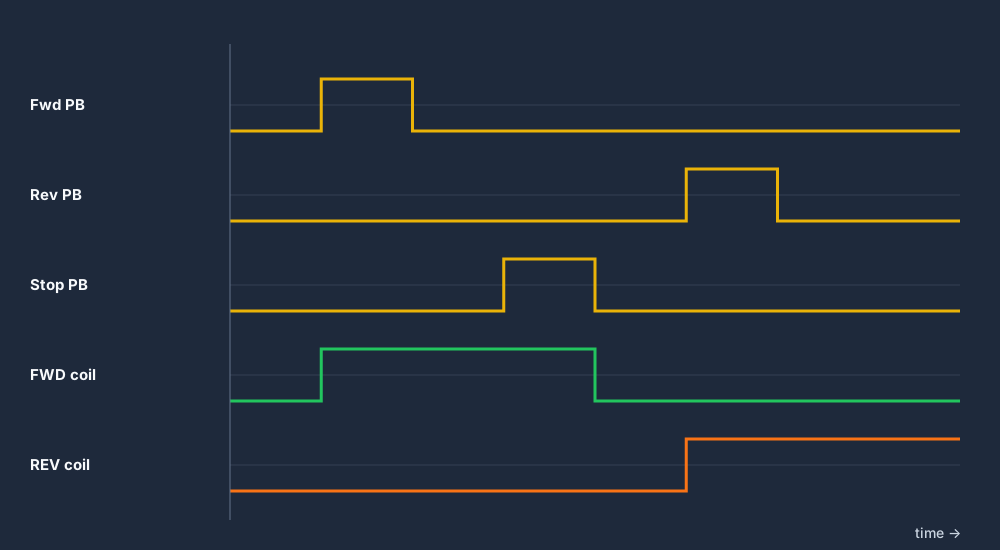
To run a motor both ways you build two seal-in rungs — one for Forward, one for Reverse — and then cross-interlock them. A normally-closed Reverse contact sits in the Forward rung, and a normally-closed Forward contact sits in the Reverse rung. The instant one contactor energises it opens the other rung, so the two contactors can never be on together. That is what prevents a phase-to-phase short across the motor terminals.
Inching the machine
Jog (inch) control
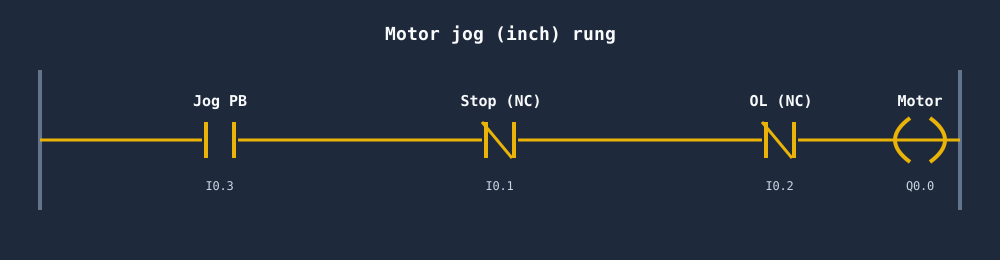
A jog rung is a seal-in rung with the seal removed. There is no parallel auxiliary contact, so the motor runs only while you hold the Jog button and stops the moment you release it. Jog is how you nudge a conveyor or spindle into position without latching it into a continuous run.
The wiring picture
How the I/O maps to the motor
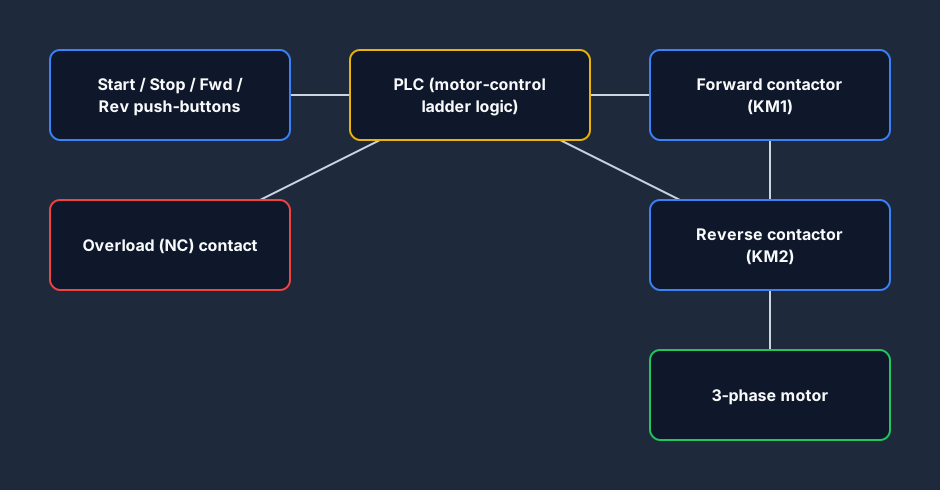
The push-buttons and the overload contact wire into the PLC inputs. The PLC solves the ladder and energises the Forward and Reverse contactor coils on its outputs. The contactors — in series with the overload — switch three-phase power to the motor. The PLC never carries motor current; it just commands the contactors.
Reduced-voltage starting
DOL vs star-delta vs VFD
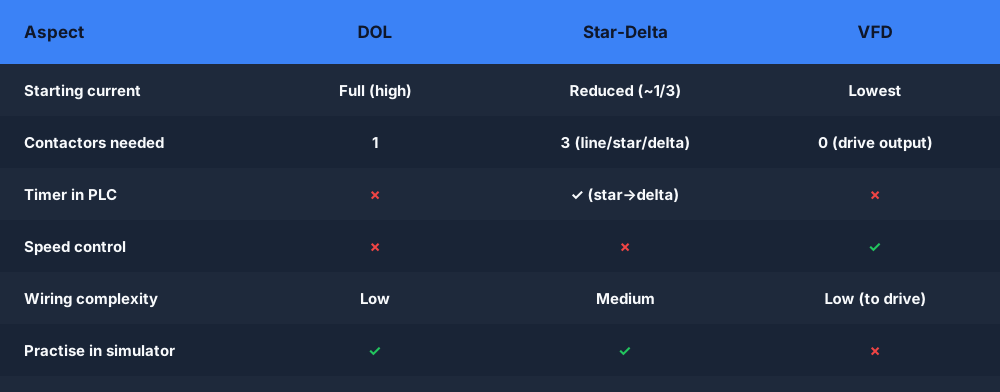
Direct-on-line (DOL) throws full voltage at the motor instantly — simplest wiring, biggest inrush current. Star-delta reduces starting current by starting the motor in star, then switching to delta after a PLC on-delay timer expires; that timer-driven contactor sequence is a great ladder-logic exercise. A VFD ramps the motor electronically and adds speed control. You can build and test the DOL and star-delta logic here; a VFD is a drive, not ladder logic.
Interlock safety checklist
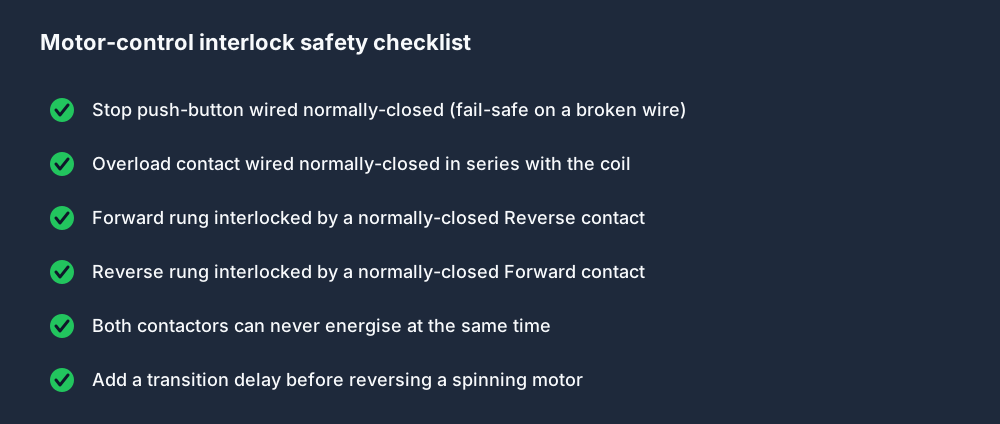
- Stop wired normally-closed — fail-safe on a broken wire.
- Overload wired normally-closed in series with the coil.
- Forward rung interlocked by a normally-closed Reverse contact.
- Reverse rung interlocked by a normally-closed Forward contact.
- Both contactors can never energise at the same time.
- Add a transition delay before reversing a spinning motor.
Build it yourself
How to build a forward/reverse circuit
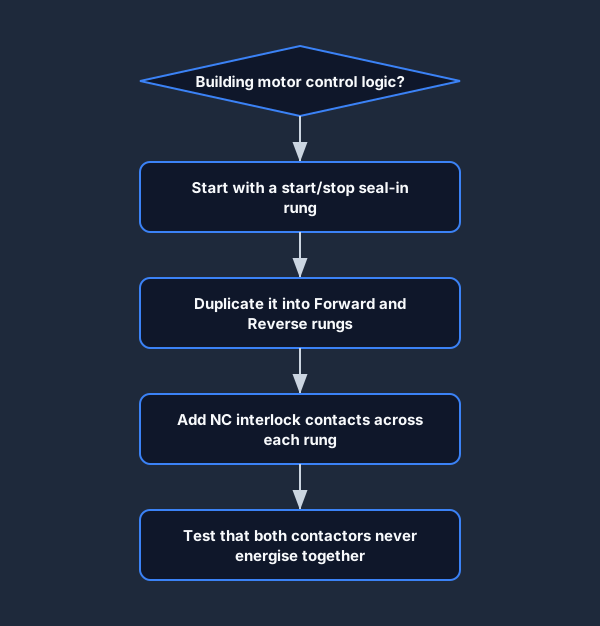
The fastest way to learn motor control is to build it in the right order: get a start/stop seal-in working, duplicate it into a Forward and a Reverse rung, then add the cross-interlock contacts and prove the two contactors can never energise together.
Practise the rungs
Motor-control scenarios to drill
These are the rungs every controls technician is expected to write from memory. Build each one in the simulator, force the inputs, and watch the seal-in and interlocks behave before you ever touch a real contactor.
Start / Stop seal-in
Three-wire control with a fail-safe normally-closed Stop — the classic first rung.
Build it in the simulator →Forward / Reverse
Two seal-in rungs cross-interlocked so both contactors can never energise.
Build it in the simulator →Star-Delta start
Line + star contactors, then an on-delay timer drops star and pulls in delta.
Build it in the simulator →Overload trip
A normally-closed overload that drops the motor out fail-safe when it opens.
Build it in the simulator →Reversing with delay
A transition delay that prevents reversing a still-spinning motor.
Build it in the simulator →Keep going
Where to practise next
Motor control is one circuit in a bigger toolkit. Once the seal-in and interlocks feel automatic, branch out into the wider ladder library and the wiring side of the panel.
- PLC simulator — the full browser PLC with scored scenarios across timers, counters, and sequencing.
- Ladder logic simulator — a focused ladder editor for building and testing rungs like these.
- PLC wiring simulator — practise wiring push-buttons, overloads, and contactor coils to PLC I/O.
Motor control PLC FAQ
Build your first motor-control rung now.
Start/stop seal-in, forward/reverse interlock, jog, and star-delta — all in the browser.