PLC Programming Certification Paths: Which One Moves Your Career in 2026
Searching plc programming certification in 2026 returns a confusing mix of vendor-run classroom programmes at the top, generic "PLC Technician Certificate" offerings in the middle, and Udemy "PLC Master Class Certificate" ads at the bottom. They're not interchangeable. Hiring-manager signal varies by an order of magnitude between them.
This is the longer companion to our PLC certification guide — focused specifically on which path to pick based on what you're trying to achieve.
Five realistic paths
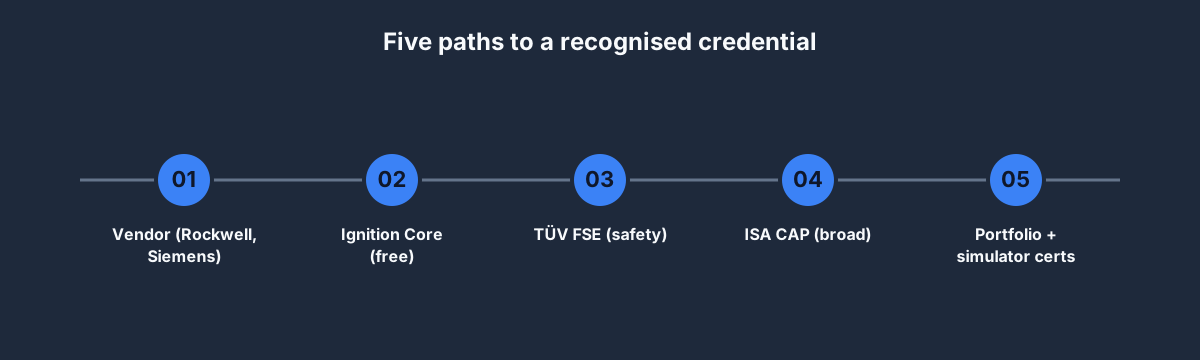
Path 1 — Vendor classroom (Rockwell CCP or Siemens ST-PRO)
- Cost: USD 2,100–2,500 per course. Most vendors have 3–4 levels.
- Format: 5-day intensive classroom, real hardware.
- Signal: strong within the vendor's ecosystem; weaker across vendors.
- Best for: engineers at plants that standardised on that vendor, especially where promotion or job security depends on the formal credential.
Detailed coverage in our Allen-Bradley training and Siemens PLC training posts.
Path 2 — Inductive Automation's Ignition Core Certification
- Cost: Free (training and exam).
- Format: Online video course + proctored online exam.
- Signal: strong within the Ignition / SCADA world; growing recognition elsewhere.
- Best for: anyone targeting SCADA/HMI roles, or any PLC role where Ignition is in the stack.
The 2026 gold standard for "free certification that actually counts."
Path 3 — TÜV FSE (Functional Safety Engineer)
- Cost: USD 2,500–3,500 for training + exam.
- Format: 3–5 day course + written exam.
- Signal: strong internationally, especially in European process and automotive industries.
- Best for: engineers targeting safety-specialist roles. Commands USD 10,000–20,000/year salary premium.
Details in our safety PLCs post.
Path 4 — ISA CAP (Certified Automation Professional)
- Cost: USD 400 exam fee + self-study materials (USD 200).
- Format: Self-study, proctored written exam covering automation broadly.
- Signal: respected, especially in process industries.
- Best for: experienced engineers (5+ years) looking for a broad automation credential rather than a vendor-specific one.
ISA also offers CST (Certified Specialist) sub-credentials for narrower focus.
Path 5 — Portfolio + simulator certificates
- Cost: USD 99–249/year on our platform (or free on the 2-scenario tier).
- Format: Graded scenarios, interview-track completion, downloadable PDFs.
- Signal: fastest-growing in 2026 because verifiable by URL.
- Best for: career switchers, bootcamp graduates, anyone who needs to prove competence fast without a five-figure classroom budget.
Our PLC certification guide covers how hiring-manager attitudes are shifting.
Certification ROI ranked
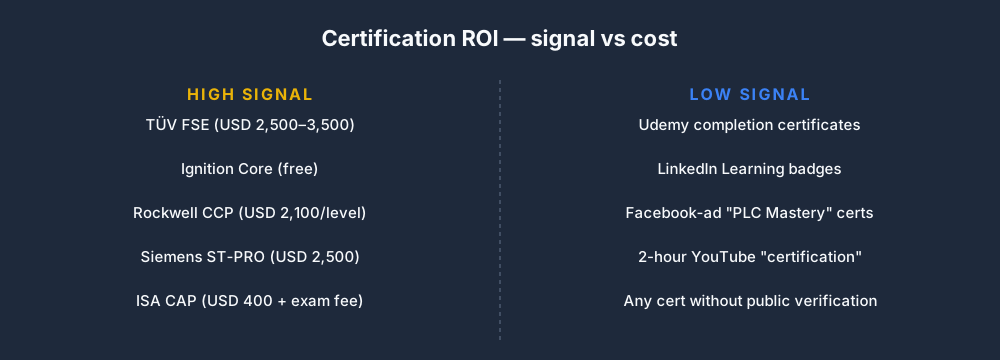
Our ranked view — high-signal certifications on the left, low-signal on the right:
High signal (worth the investment):
- TÜV FSE — genuinely specialist, genuinely pays more
- Ignition Core — free, respected, verifiable
- Rockwell CCP / Siemens ST-PRO — strong in-ecosystem
- ISA CAP — broad automation recognition
- Portfolio with public URL — increasing signal, lowest cost
Low signal (avoid or treat as supplements only):
- Udemy completion certificates — near-zero
- LinkedIn Learning badges — marginal, and only on LinkedIn itself
- "PLC Master Class" Facebook-ad certifications — red flag
- 2-hour YouTube "certification" courses — not a thing
- Any certificate without public verification URL — hard to trust
Picking based on your goal
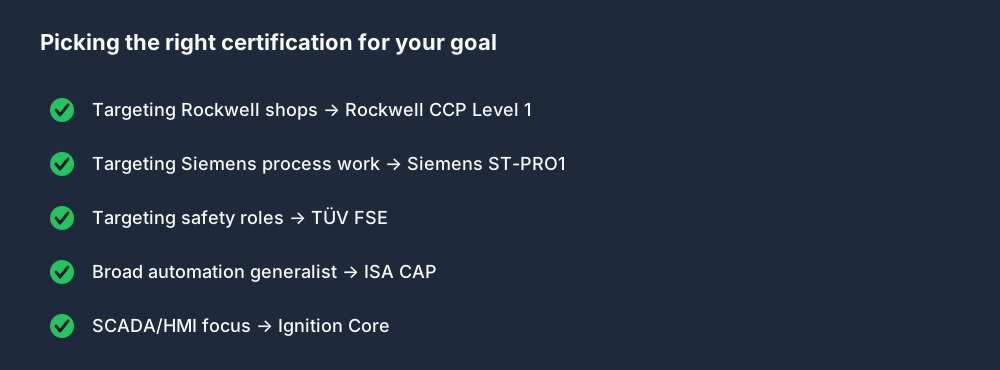
Match your certification to your target job:
- Rockwell shop (North American automotive, pharma, discrete manufacturing) → Rockwell CCP Level 1 first, then Level 2 if your employer pays.
- Siemens shop (European automotive, process, heavy manufacturing) → Siemens ST-PRO1 first.
- Safety specialist role → TÜV FSE. Nothing else substitutes.
- SCADA / HMI engineer → Ignition Core, then our PLC+SCADA curriculum.
- Broad automation generalist → ISA CAP + a vendor cert for whichever vendor your region uses most.
- Career switcher without employer funding → portfolio via our Pro plan + one targeted vendor cert only when you have a specific job in play.
The hidden trap: "Technician Certificate" programmes
Many regional institutes sell "PLC Technician Certificate" programmes for USD 800–2,000. Quality varies widely. Before enrolling, check:
- Accreditation: is the institute accredited by a recognised body? Unaccredited institute certificates carry low signal.
- Graded assessments: does the programme end in a real test or just completion?
- Graduate outcomes: do they publish placement rates? Ask for specific employers.
- Industry advisory: does the curriculum involve working engineers or just salespeople?
If two of those are weak, skip. Use the USD 1,500 for our Pro plan plus a vendor course if needed.
How hiring managers actually weigh certifications in 2026
Based on conversations with controls-team leaders across a dozen industries:
- Portfolio URL > any certificate — takes 10 minutes to evaluate, directly shows skill.
- Vendor cert at the specific shop they run — meaningful.
- TÜV FSE for safety roles — meaningful.
- Ignition Core for Ignition shops — meaningful.
- Generic "PLC certificate" from an institute they've never heard of — tolerated but not weighted.
- Udemy certificate — anti-signal. Sometimes flagged as "willing to accept low-quality credentials."
The shift from certificates to portfolios is the single biggest change in PLC hiring this decade.
A recommended stack
For someone starting in 2026 targeting their first PLC job:
- Tier 0 (mandatory): Portfolio via our Pro plan. Six interview-track certificates + 40 scenario PDFs.
- Tier 1 (optional, if targeting vendor): one vendor cert — Rockwell CCP 1 or Siemens ST-PRO1.
- Tier 2 (optional, if targeting SCADA): free Ignition Core certification.
- Later (after 3+ years experience): ISA CAP or TÜV FSE depending on specialisation direction.
Total cost for year 1 job-readiness: USD 249 on our Pro plan + USD 2,100 optional vendor cert = USD 0–2,349 depending on employer reimbursement.
FAQ
Which PLC certification is best?
Depends on goal. TÜV FSE for safety, Ignition Core for SCADA, Rockwell CCP for North American manufacturing, Siemens ST-PRO for European markets, ISA CAP for generalist recognition, portfolio for everything else.
Is there a free PLC programming certification?
Yes, several. Ignition Core (Inductive Automation), some Rockwell free-tier certifications on Rockwell Learning Services, and our Pro plan's interview-track certificates (paid, but low-cost relative to alternatives).
How much do PLC certifications cost?
Free (Ignition Core) to USD 3,500 (TÜV FSE). Most vendor certs are USD 2,000–2,500. Our simulator's portfolio certificates come with the USD 249/year Pro plan.
Do PLC certifications expire?
Vendor certs usually: 2–3 year renewal cycle. Safety (TÜV FSE): similar. ISA CAP: 3-year renewal with continuing education. Portfolio evidence: never expires — it's what you did.
Which PLC certification pays the most salary premium?
TÜV FSE (safety): USD 10,000–20,000/year premium because the role is genuinely specialist. Vendor certs don't reliably pay premia; they gate specific roles.
Where to start
- Self-fund: portfolio first. Sign up for our Pro plan, work 40 scenarios, collect 6 interview-track certificates. USD 249/year, no classroom cost.
- Employer-funded: vendor cert first. Take Rockwell CCP or Siemens ST-PRO on someone else's dime. Supplement with free Ignition Core if SCADA is in scope.
- Specialist path: TÜV FSE later. Once you have 2+ years experience, add safety as a specialty.
Certifications follow skill. Skill comes from writing programs that pass tests. Start with the portfolio; the paper comes after.